BIM & Digital Fabrication Now Standard in Mass Timber Projects

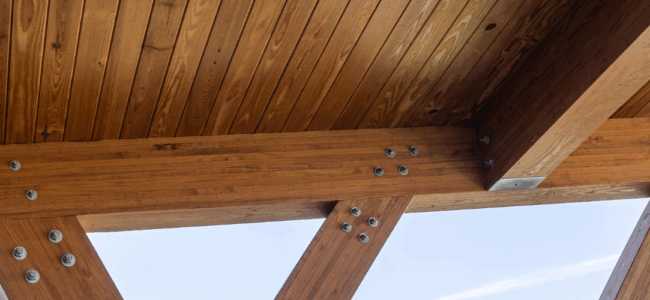
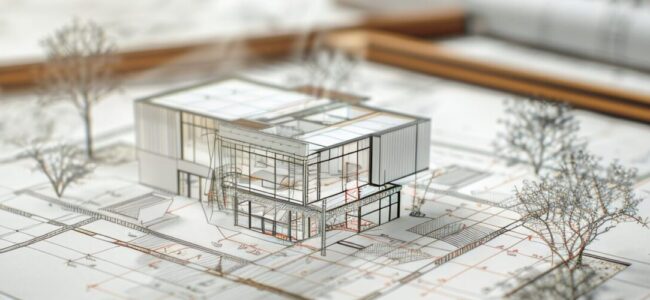
Once viewed as advanced, the integration of building information modeling (BIM) and digital fabrication has become a baseline expectation in modern mass timber construction and is deemed essential for delivering the precision and efficiency that timber projects demand. BIM is a set of technologies, processes, and policies that allow stakeholders…

Read More

The Evolution of the Mass Timber Workforce

The exacting nature of mass timber engineering and fabrication means each step in the creation of individual components must be overseen by well-trained technicians to ensure accurate fitting and timely assembly at the build site. Today’s demand for mass timber, and in particular the growth of cross-laminated timber (CLT) manufacturing facilities…

Read More

The Mass Timber AMM Guide

Recent updates to the International Building Code (IBC) have expanded what’s possible in mass timber design and construction. While these changes open the door to new building heights, many jurisdictions across the country have not yet adopted mass timber–specific provisions for Type IV construction. To bridge that gap, the American Wood Council…

Read More

Increased Exposure Allowances for IV-B Construction

What a difference a few years can make. The 2021 IBC guidelines for buildings of Type IV construction divided the classification into three categories: IV-A (buildings up to 18 stories), IV-B (12 stories), and IV-C (nine stories). In IV-B buildings, the amount of exposed timber ceilings permitted was only 20%.However, in 2024, IV-B was updated…

Read More

Spans, Connections & Loads: Structural Design in Timber Frame Builds

Heavy timber construction is widely admired for its warmth, craftsmanship, and strong architectural presence. But beyond aesthetics, designing a successful timber frame building requires a solid understanding of how it performs structurally. Timber behaves differently from steel or concrete, and its performance is shaped by a clear set of structural…

Read More

Why Is Mass Timber on the Rise in America?

For years, designers and developers have celebrated mass timber for its sustainability, warmth, and beauty. Its natural appeal is undeniable, but now other qualities, along with a convergence of outside forces, are driving a rapid acceleration of mass timber construction across the United States. To better understand what’s fueling this momentum…

Read More

Timber-Concrete Composite Systems: New Insights

Recent research into timber-concrete composite (TCC) systems highlights their growing potential for sustainable, high-performance structures. In a study by the University of Santiago de Compostela in Spain, a simply supported beam was compared with a frame-connected TCC beam, with both beams measuring 370 millimeters (1.2 feet) wide and testing…

Read More

Mass Timber High-Rises Take Root in Europe

Europe has become a testing ground for innovative mass timber architecture, driven by policy, public support for sustainability, and a cultural shift toward renewable materials. For builders in the United States, these high-rise projects offer valuable technical lessons and design inspiration, demonstrating how hardwoods and engineered wood composites…

Read More

The Future of Mass Timber in Healthcare & Education

Mass timber is increasingly popular in commercial architecture, and now healthcare and educational buildings are poised to embrace it in meaningful ways. Regulatory Shifts Unlock Possibilities The 2024 International Building Code (IBC) introduced new commercial construction types — IV-A, IV-B, and IV-C — that allow mass timber structures…

Read More

Evaluating Land for Timber Frame Construction

Evaluating and approving a property’s drainage, topography, environmental conditions, and code compliance spurs a building project forward in earnest. For a timber frame build, additional requirements should be considered early in the planning process to ensure structural integrity as well as performance and durability for years to come. As…

Read More